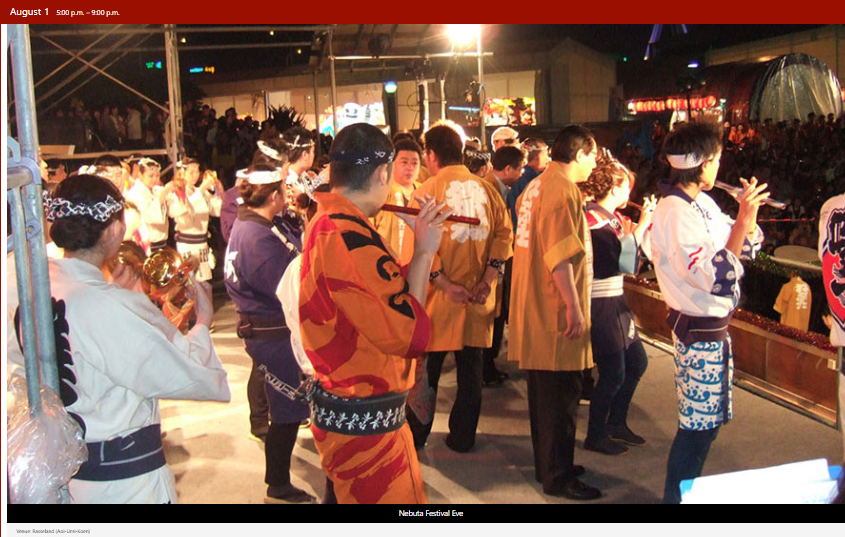
Nebuta Festival Eve
Venue: Rasseland (Aoi Umi Koen)
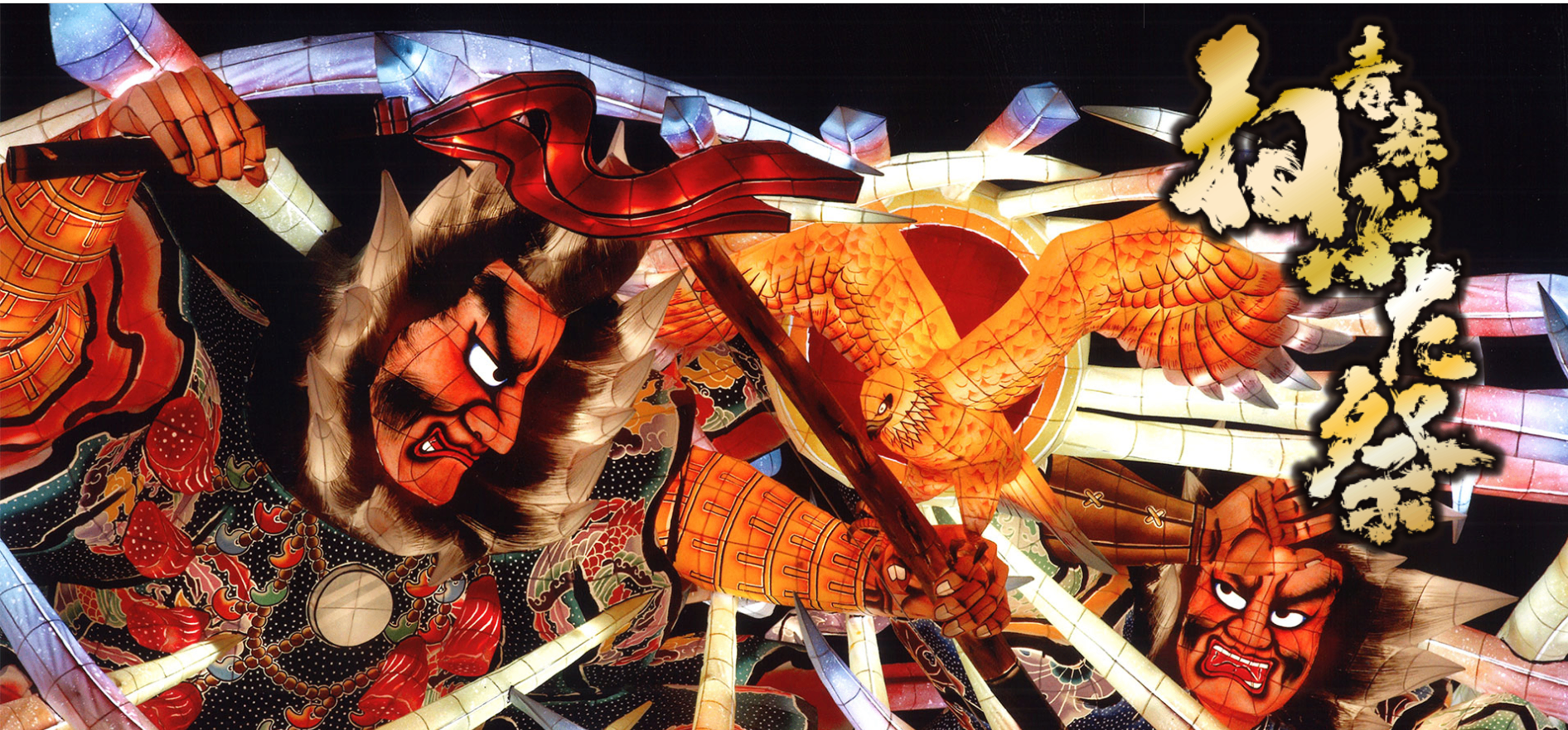
August 2 – 7, Aomori, Japan
The epitome of Aomori's summer, the Nebuta Festival is one of the most famous festivals in Japan, attracting millions of visitors each year. The main attraction is large, colorful and dramatic human-shaped floats called Nebuta — 9 meters wide, 7 meters deep and 5 meters high — most of them resembling ancient warlords, historical characters and kabuki heroes. These floats parade through the streets of Aomori, with haneto dancers bouncing down the streets to the exciting music of Nebuta bayashi bands.
Venue: Rasseland (Aoi Umi Koen)
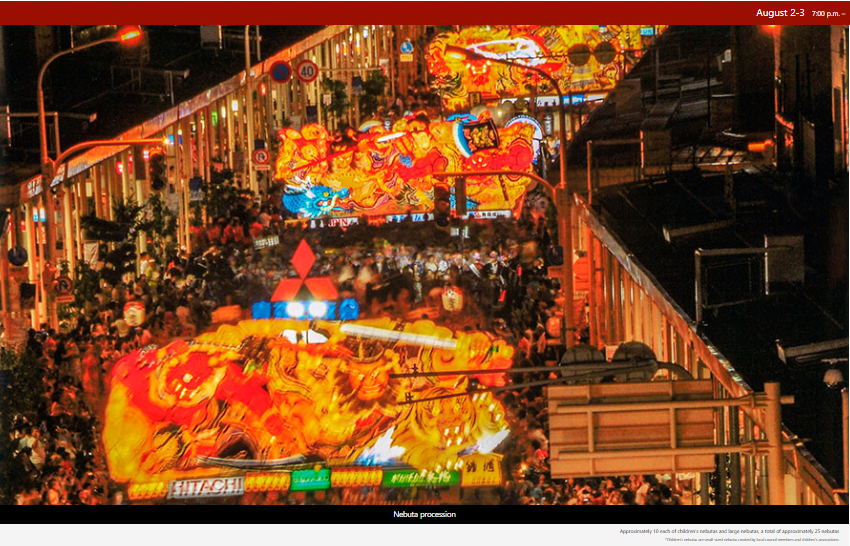
Approximately 10 children's nebutas and large nebutas, a total of ~25 nebutas.
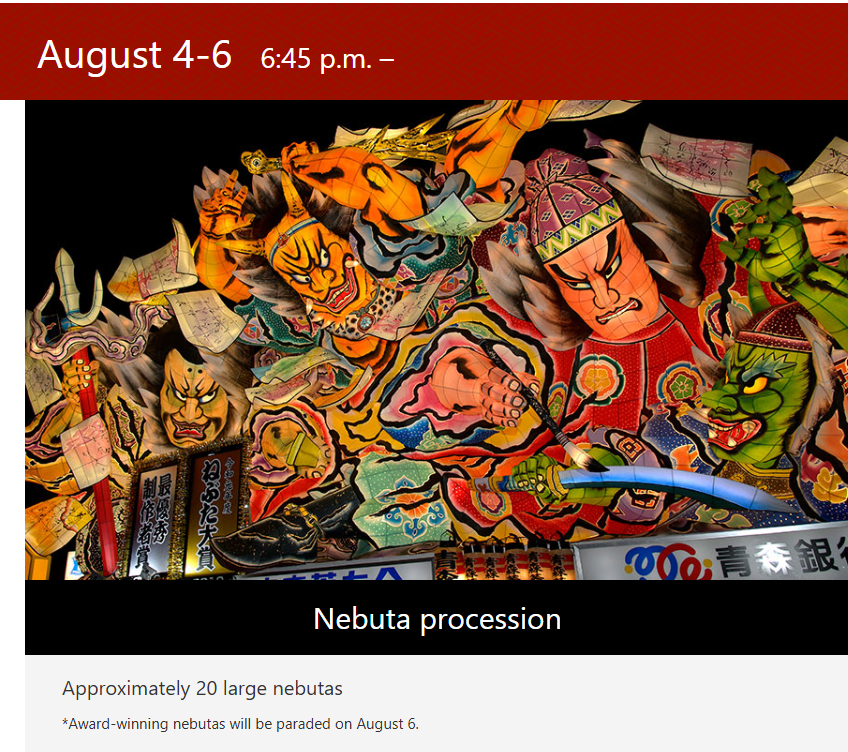
Approximately 20 large nebutas. Award-winning nebutas parade on August 6.
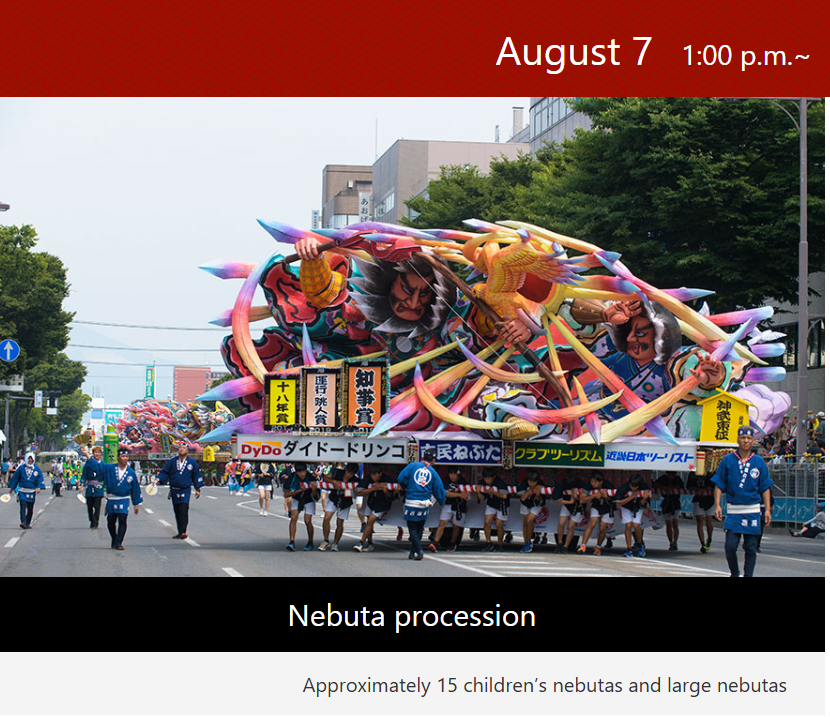
Approximately 15 children's nebutas and large nebutas.
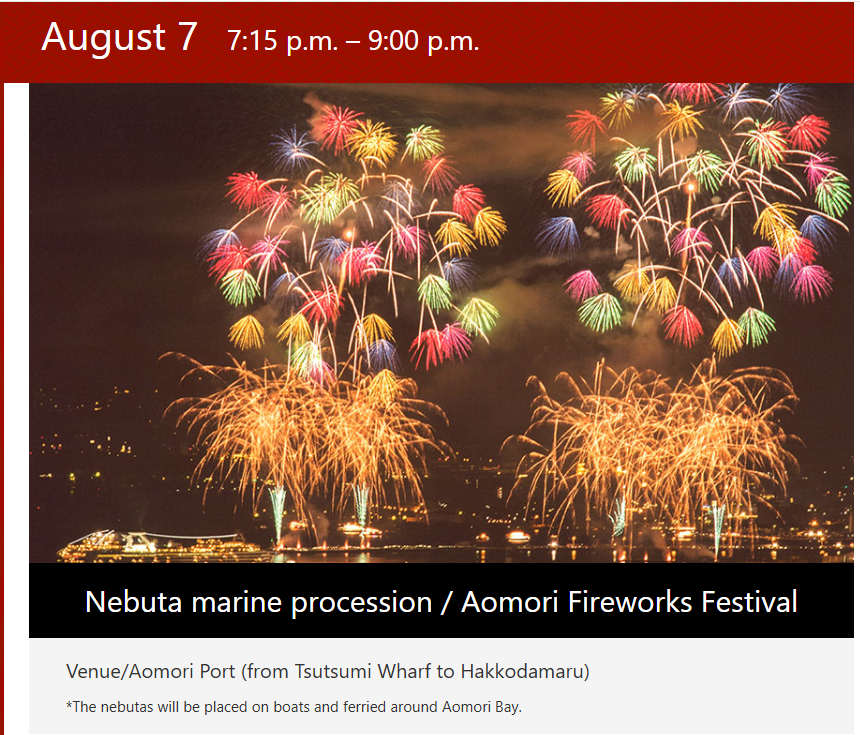
Venue: Aomori Port (Tsutsumi Wharf to Hakkodamaru). Nebutas are placed on boats and floated around Aomori Bay.
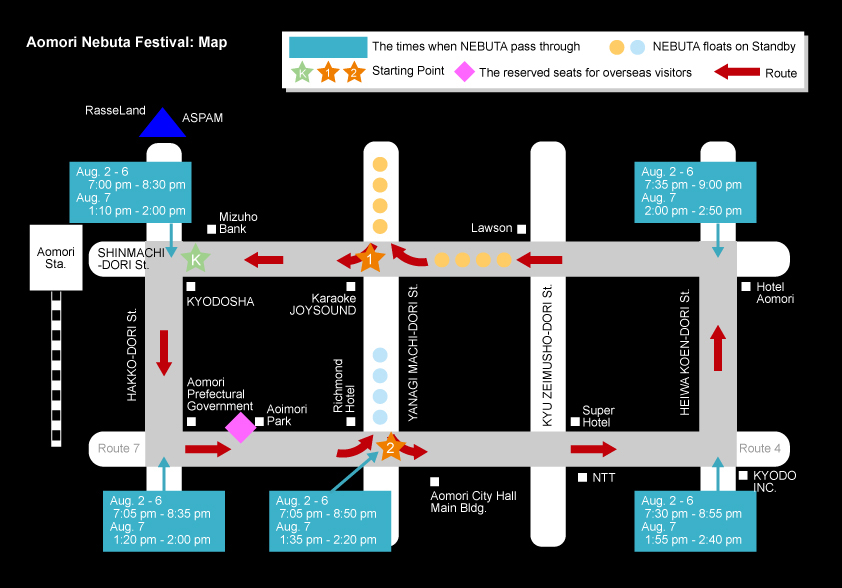
The festival takes place in the center of Aomori City — a 10-minute walk from JR Aomori Station, 30 minutes by car from Aomori Airport and 15 minutes from Aomori Chuo IC. The route is roughly 3.1 km long; you can view the nebutas from the pedestrian walk as they parade down the car lanes.
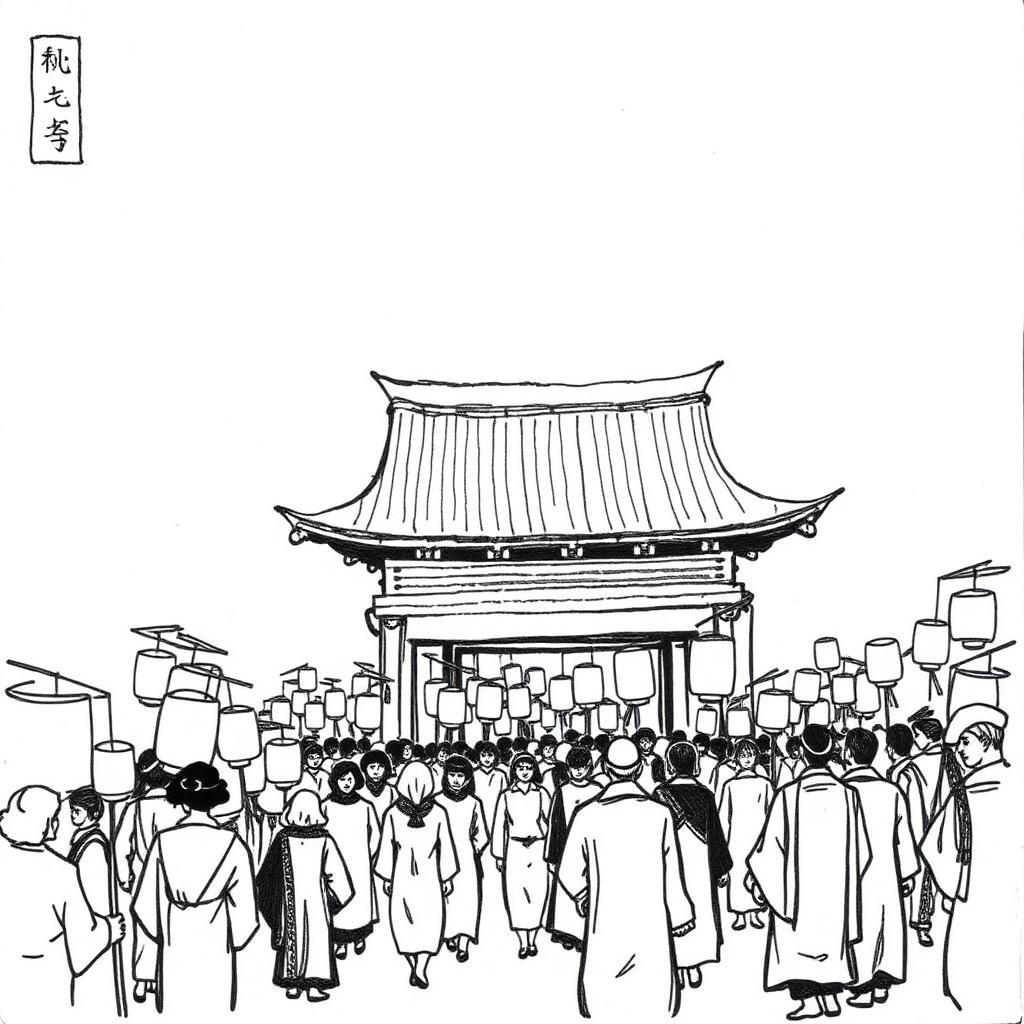
Aomori Nebuta Festival is said to have originated as a variant of the Tanabata Festival, though the authenticity of the story is uncertain. When Tanabata customs and traditional events said to have united with China and Tsugaru met paper, bamboo and candles as materials, they are said to have turned into lanterns and eventually into nebuta. Traditionally, nebutas have been created by local councils and paraded every year. They have been getting larger and more detailed ever since.
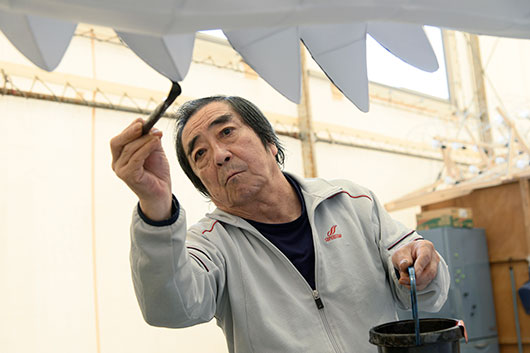

The creators of large nebutas are called Nebutashi, or nebuta masters. They are the specialists who decide the basic design, the entire structure and colors of nebutas. Every year after the Nebuta Festival, the masters start planning the next year's nebutas, completing the first draft of design during the winter. Detailed parts like the face, arms and legs are created first, and by May the entire structure is built in mucilage with wood and wires. Light bulbs are then put inside, and the wire structure is covered on the inside with traditional Japanese paper. Once the paper is pasted to the entire structure, outlines are drawn in black charcoal ink, patterns are drawn with melted candles, and finally colored with paintbrushes and sprays to complete the nebuta.
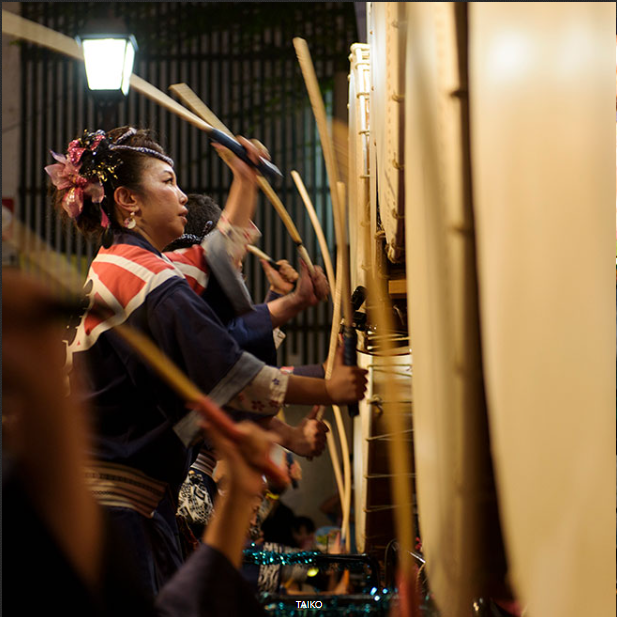
Nebuta bayashi, or nebuta music bands, consist of drums, flutes and hand cymbals. The drummers set the rhythm, the flute plays the melody, and the cymbals accentuate the music. The haneto dancers dance and bounce to this music.
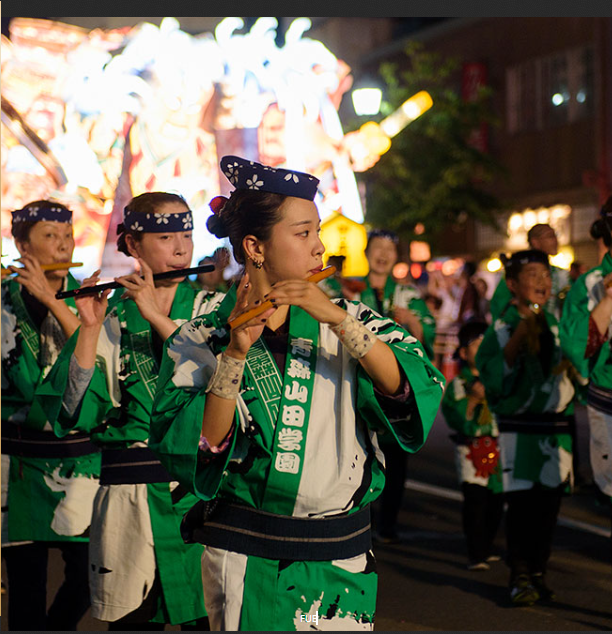
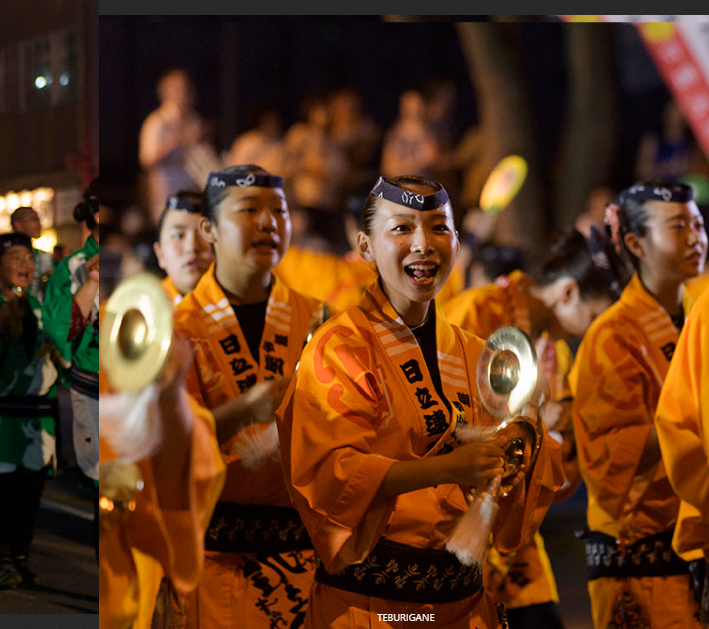
Dancers in the Nebuta Festival are known as haneto. They dance and bounce down the streets with the nebutas, chanting "Rassera, Rassera." Anyone can join the dance as long as they wear a haneto costume, which is part of the festival's appeal.
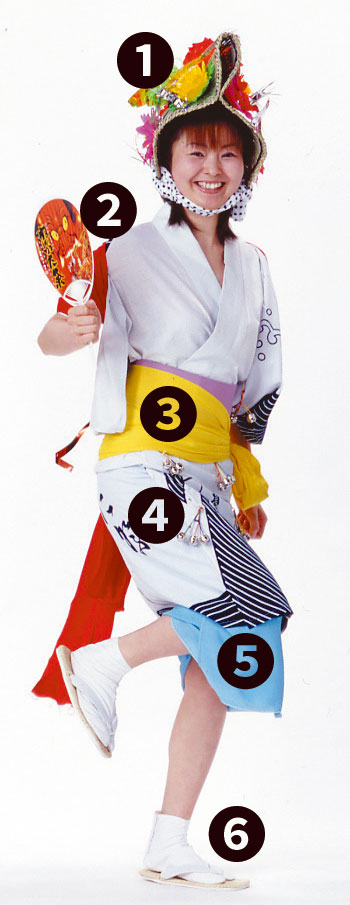
Hanetos can just walk in and start dancing — no need to book in advance or on the day of the event. You can wear an official haneto costume and join any nebuta group of your choice from the starting point. Haneto costumes can be purchased at department stores in Aomori City and elsewhere. Some stores rent them and help you put on the costume.
There are paid seats along the route. Visitors are welcome to watch the procession from other spots, but they are usually crowded. Please purchase paid seats in advance. If there are vacancies, they will be available for purchase on the day of the event. If it rains, the festival will still go ahead, with nebutas being covered with large vinyl sheets. Please wear a raincoat in rain and refrain from using an umbrella, as it obstructs the view of other visitors.